The Complete Guide to Dog Waste Cleanup Services
We love our dogs. The belly rubs, the zoomies across the yard, the way they greet us at the door like we’ve been gone for years (even if it was just a trip to the mailbox). What we don’t love? The aftermath in the backyard.
If you’ve ever looked out at your yard on a drizzly Saturday morning in Tacoma and thought, “I really should deal with that,” you’re not alone. Millions of American pet owners quietly dread the weekly (or, let’s be honest, bi-weekly… or monthly) poop patrol. And in the Pacific Northwest — where rain is basically a personality trait — neglected dog waste doesn’t just sit there. It gets soggy, breaks down into the soil, and creates a mess that goes way beyond aesthetics.
That’s where dog waste cleanup services come in. And no, hiring someone to scoop your yard isn’t lazy. It’s actually one of the smartest decisions a pet owner can make for their health, their yard, and their sanity.
Let’s break it all down.
What Exactly Does a Dog Waste Cleanup Service Do?
At its core, a dog waste cleanup service sends a trained technician to your property on a regular schedule to locate and remove all dog waste from your yard, walkways, patio areas, or any other space your pup frequents.
Here’s what a typical service visit looks like:
- Arrival and property walk-through. The technician arrives during your service window — you don’t even need to be home. Most services work with a gate code or simply access the yard while you’re at work.
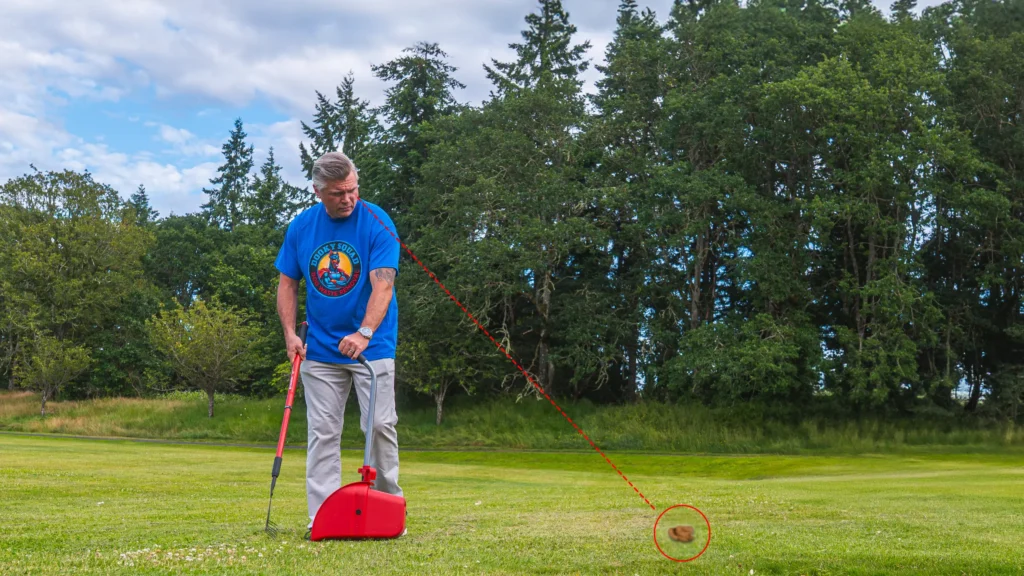
- Systematic waste removal. Using professional tools, the tech walks a grid pattern across your entire yard to ensure nothing is missed. This isn’t a casual stroll — it’s a methodical sweep.
- Bagging and disposal. All waste is double-bagged and either placed in your trash bin or hauled off-site, depending on the service.
- Yard inspection. Good technicians will note anything unusual — areas that are getting torn up, signs of digestive issues in your dog’s waste, or potential hazards in the yard.
- Service confirmation. Many companies send a notification or leave a door tag so you know the job is done.
That’s it. No fuss, no awkward interactions, no stepping in something unexpected during your next barefoot walk across the lawn.
How Often Should You Schedule Service?
This depends on a few factors — mostly how many dogs you have and how big your yard is. Here’s a general guideline:
- 1 dog, average yard: Once per week is the sweet spot for most households.
- 2 dogs: Once or twice per week, depending on breed size.
- 3+ dogs: Twice per week is strongly recommended. Large breeds produce a surprising volume of waste.
- Small yards or high-traffic areas: More frequent service prevents buildup and keeps odors under control.
In Western Washington specifically, weekly service is the minimum most providers recommend. Why? Because our climate — cool, damp, and overcast for much of the year — creates the perfect environment for waste to break down slowly while bacteria and parasites thrive. A pile that might dry out and become less hazardous in Arizona can stay biologically active for weeks in Lakewood or Gig Harbor.
What to Look for in a Dog Waste Cleanup Service
Not all pooper scooper services are created equal. If you’re evaluating providers — whether you’re in University Place, Bremerton, or out in Spanaway — here’s what separates the pros from the amateurs:
Reliability and Consistency
The number one complaint pet owners have about cleanup services? No-shows. Look for a company that:
- Has a set schedule and sticks to it
- Communicates proactively if there’s a delay
- Doesn’t require you to be home
- Has a track record of showing up in all weather (yes, even during a November downpour in Spanaway)
Thoroughness
A good technician doesn’t just grab the obvious piles. They check along fence lines, under bushes, around play equipment, and in those shady corners where your dog has a “favorite spot.” If your yard has gravel areas, bark dust, or ground cover, the tech should be trained to locate waste in those tricky surfaces.
Insurance and Professionalism
This might sound excessive for a poop-scooping service, but it matters. A legitimate company carries liability insurance. Their technicians should be identifiable (uniforms, branded vehicles, or at minimum an ID badge). And they should have a clear cancellation and service policy.
Local Knowledge
A company that understands the specific challenges of your area is worth its weight in gold. For example, properties in Artondale and Longbranch on the Gig Harbor peninsula often have larger, more spread-out yards than homes in Midland or Steilacoom. A provider familiar with the area will adjust their approach accordingly.
Here in Western Washington, Dooky Squad covers Pierce, Kitsap, and Thurston counties — from Tacoma to Poulsbo to Olympia — so they understand the unique terrain and climate across the entire service area.
Transparent Pricing
Beware of companies that quote one price and charge another. Good services offer straightforward pricing based on:
- Number of dogs
- Frequency of service (weekly, bi-weekly, one-time)
- Yard size or property type
- Any add-on services (deodorizing, sanitizing, etc.)
The Health Risks You’re Ignoring
Let’s get serious for a moment. Dog waste isn’t just unpleasant — it’s a genuine health hazard. The EPA classified pet waste as a nonpoint source pollutant in the same category as herbicides, insecticides, oil, grease, and toxic chemicals. That’s not an exaggeration.
Here’s what’s lurking in that pile you’ve been meaning to pick up:
- E. coli — Can cause severe gastrointestinal illness, particularly dangerous for children.
- Giardia — A parasitic infection that causes diarrhea, cramps, and nausea. Cysts can survive in soil for months.
- Roundworm (Toxocara) — The CDC reports that approximately 14% of Americans have been infected with Toxocara. Children who play in contaminated soil are at highest risk. In rare cases, larvae can migrate to the eyes and cause vision loss.
- Hookworm — Larvae penetrate skin on contact with contaminated soil. Walking barefoot in an infested yard is enough.
- Salmonella — Present in the waste of many dogs, even healthy ones showing no symptoms.
According to a study published in the journal Applied and Environmental Microbiology, a single gram of dog waste can contain 23 million fecal coliform bacteria. To put that in perspective, that’s roughly twice the concentration found in human sewage.
And here’s the kicker for us in Western Washington: rain doesn’t wash the problem away. It makes it worse. Stormwater runoff carries pathogens from dog waste directly into Puget Sound, local creeks, and groundwater. The Tacoma-Pierce County Health Department and Kitsap Public Health District have both issued guidance urging pet owners to pick up waste promptly — not just for yard hygiene, but for watershed protection.
The Cost Comparison: DIY vs. Professional Service
Let’s do the math that most people avoid. For a deeper dive into pricing, check out our 2025 pet waste removal costs and pricing guide.
DIY Costs (Annual)
- Poop bags: ~$50-80/year (if you’re using quality bags)
- Your time: 15-30 minutes per session, 52 weeks/year = 13-26 hours annually
- Replacement shoes/flip-flops ruined by “landmines”: Priceless (but probably $40)
- Yard deodorizer: $30-60/year
- Misery factor: Incalculable
Estimated annual DIY cost: $120-180 + 13-26 hours of your life
Professional Service Costs (Annual)
Most dog waste cleanup services in Western Washington charge between $15-25 per visit for weekly service with one dog. That works out to roughly $60-100 per month or $720-1,200 per year.
Is that more expensive than doing it yourself? On paper, yes. But factor in the time savings, the consistency (no more “I’ll get to it next weekend” guilt spirals), the thoroughness, and the health benefits — and the value equation shifts dramatically.
For households with multiple dogs, the per-dog cost typically decreases. And many services offer discounts for bi-weekly plans or long-term commitments.
Why Washington’s Climate Makes Professional Cleanup Essential
We need to talk about the elephant in the room. Or more accurately, the rain cloud.
Western Washington receives an average of 37-50 inches of rainfall per year, depending on your specific location. Olympia averages about 50 inches. Bremerton gets around 40. Even during the “dry” months of July and August, morning dew and marine moisture keep the ground damp.
This matters for dog waste management in several critical ways:
Slower Decomposition, Longer Hazard Window
In dry, hot climates, dog waste can desiccate and lose much of its pathogenic load within a week or two. In the Pacific Northwest, waste stays moist and biologically active for weeks to months. The cool temperatures (averaging 45-55°F for much of the year) slow decomposition while keeping bacteria and parasites alive and transmissible. If you’ve been hoping a dog poop dissolver will handle it, the wet climate makes that even less effective.
Runoff and Water Contamination
When it rains on accumulated dog waste — and it will — pathogens wash into storm drains, ditches, and eventually into local waterways. The Puget Sound Partnership has identified pet waste as a significant contributor to fecal coliform contamination in the Sound and its tributaries. If you live near Chambers Creek in Lakewood or any of the streams feeding into Sinclair Inlet near Bremerton, this directly affects your local water quality.
Mud and Tracking
Wet waste + mud = a nightmare for indoor cleanliness. Dogs track contaminated soil inside on their paws, depositing bacteria on floors, carpets, and furniture. Regular waste removal dramatically reduces this risk.
Moss and Lawn Damage
Dog waste is high in nitrogen, and while a small amount of nitrogen can fertilize grass, concentrated deposits create “burn spots” — those yellow or brown patches that dot neglected yards. In Western Washington, where moss already competes aggressively with grass, waste-damaged turf often gets overtaken by moss rather than recovering. Professional removal helps keep your lawn healthy year-round.
Dooky Squad’s Approach
Full disclosure: we’re a locally-owned pet waste removal company, and we’re proud of it. But we built Dooky Squad specifically because we saw the gap between what pet owners in Western Washington needed and what was actually available.
Here’s what makes our approach different:
We’re genuinely local. Our technicians live in the communities they serve — from Silverdale’s Sterling Hills neighborhood to East Olympia to Roy. They know which neighborhoods have larger lots, which developments have shared green spaces, and how to navigate the quirks of properties across Pierce, Kitsap, and Thurston counties.
We show up rain or shine. This is the Pacific Northwest. If we took rain days, we’d work about three months a year. Our teams are equipped and trained for all-weather service.
We’re thorough. Every visit includes a systematic sweep of your entire yard, not just the obvious areas. We check fence lines, garden edges, under decks, and around play equipment.
We handle disposal. Waste is double-bagged and removed. You don’t need to deal with it at all.
We communicate. Service confirmations, schedule changes communicated in advance, and responsive customer support. No ghosting.
We also offer commercial services for HOAs, apartment complexes, and property managers who need pet waste management at scale.
When to Consider One-Time vs. Recurring Service
Not everyone needs weekly service, and that’s fine. Here are some scenarios where different service levels make sense:
One-Time Deep Clean
- You’re moving into a new home and the previous owner left “gifts”
- Spring cleanup after a long winter of neglect
- Preparing for an outdoor event or party
- Getting your rental property ready for new tenants
Weekly Recurring Service
- You have one or more dogs using the yard daily
- You want to maintain a consistently clean, safe yard
- You have children or grandchildren who play outside
- You’re tired of the chore and want it off your plate permanently
Bi-Weekly Service
- You have one small dog
- You supplement with some DIY pickup between visits
- Budget-conscious but still want professional help
Frequently Asked Questions
How much does a dog waste cleanup service cost?
Most services in Western Washington charge between $15-25 per visit for weekly service with one dog. Pricing varies based on the number of dogs, yard size, service frequency, and your location. Bi-weekly and one-time cleanup options are also available, though per-visit costs may be slightly higher. Many providers, including Dooky Squad, offer free quotes.
Do I need to be home for the service?
No. The vast majority of dog waste cleanup visits happen while homeowners are at work or running errands. You’ll typically provide a gate code or instructions for accessing the yard. The technician arrives during your service window, completes the cleanup, and leaves — you come home to a clean yard.
Is dog waste really that dangerous?
Yes. The EPA classifies pet waste as a nonpoint source pollutant. Dog feces can contain E. coli, Giardia, roundworm, hookworm, and Salmonella, among other pathogens. A single gram contains an estimated 23 million fecal coliform bacteria. Children, elderly individuals, and immunocompromised people are at elevated risk. In the Pacific Northwest, where cool, wet conditions preserve pathogens longer, the risk is compounded.
What happens to the waste after it’s collected?
Professional services bag the waste and dispose of it in accordance with local regulations. Most services double-bag waste and place it in your curbside trash bin or haul it off-site. Dog waste should never be composted for use on food gardens due to pathogen risks.
How is a professional service better than picking it up myself?
Professional technicians use systematic methods to ensure no waste is missed. They work on a consistent schedule regardless of weather, eliminating the “I’ll do it later” cycle that leads to buildup. They also handle disposal and can spot potential health issues in your dog’s waste. The time savings alone — roughly 15-25 hours per year — make it worthwhile for many pet owners.
Does dog waste attract pests?
Absolutely. Accumulated dog waste attracts flies, rodents, and other pests. Flies lay eggs in waste, and the resulting larvae can spread to other areas of your yard and home. Rodents, including rats, are attracted to the protein content. Regular removal is one of the simplest ways to reduce pest activity in your yard.
Ready for a Cleaner Yard?
Join the thousands of PNW pet owners who've made the switch to professional cleanup.
Get a Free Quote