
How Often Do Dogs Poop? What the Real Number Means for Your Yard
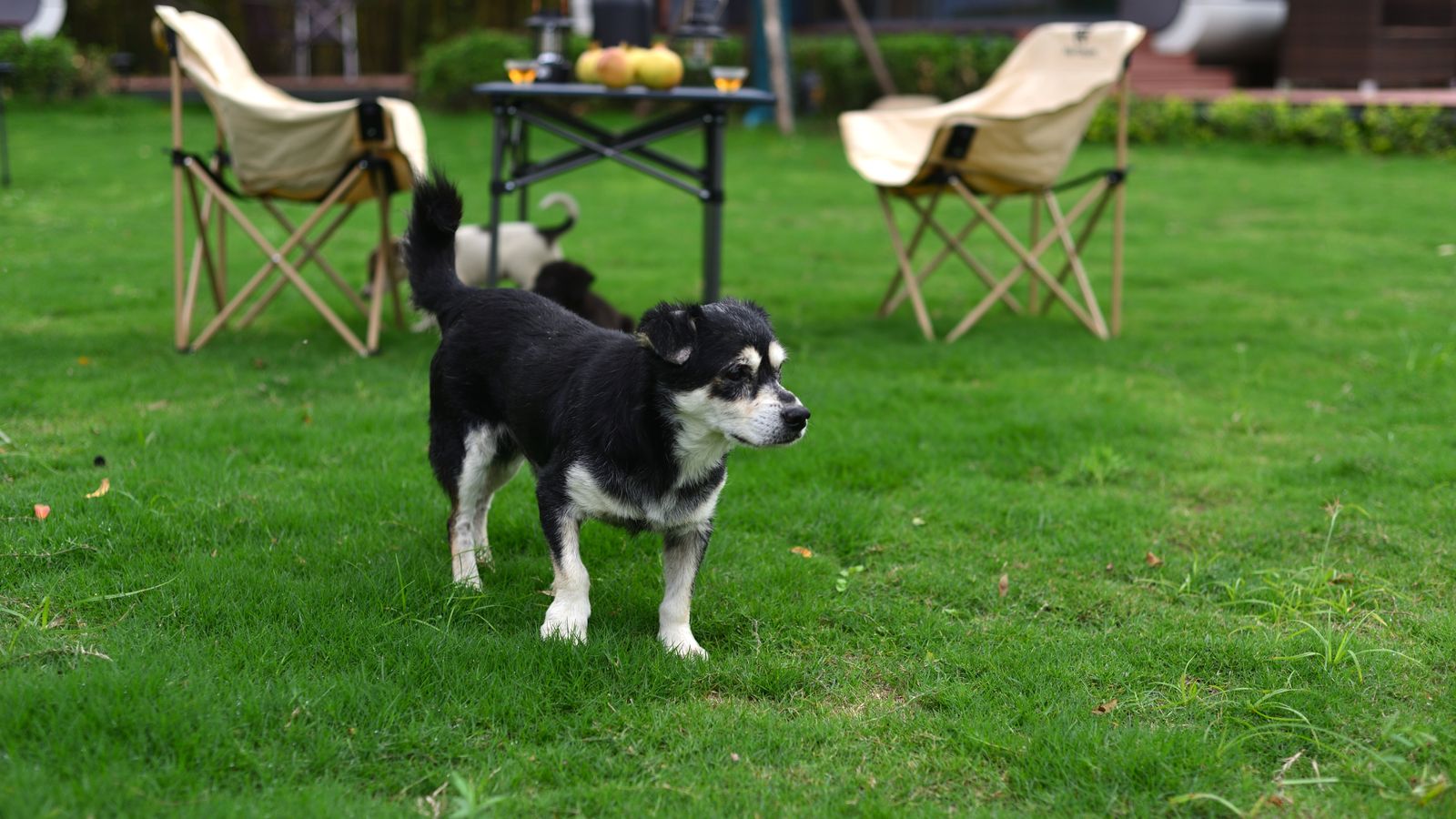
You went out to the yard expecting a few piles and found a small landscape of them. Or the opposite: your dog has not gone since yesterday morning and you are starting to wonder if that is normal. Either way, the question underneath is the same one we get asked in driveways from Puyallup to Silverdale: how often do dogs poop, and is mine doing it too much or not enough?
Here is the plain answer, plus what that number actually looks like once it lands in your grass week after week.
How Often Do Dogs Poop? The Short Answer
Most dogs go one to three times a day. VCA Animal Hospitals puts it the same way in its guidance on house soiling: most dogs defecate one to three times daily, and often do it shortly after eating. So if your adult dog goes twice a day like clockwork, nothing is wrong. If they go once, nothing is wrong either, as long as that has always been their pattern.
The word to hold onto is pattern. There is no universal correct number. There is only your dog’s normal, and then there is a change from it. A dog that has gone twice a day for four years and suddenly goes five times is telling you something. A dog that has always gone three times is just being that dog.
Why the Number Shifts From Dog to Dog
Four things move the count more than anything else.
Age. Puppies go the most, by a wide margin. Their digestion is fast, they eat more meals per day, and their control is still developing. The American Kennel Club’s puppy potty training timeline uses a rule worth memorizing: take your puppy’s age in months and add one, and that is the maximum hours they should be expected to hold it. A four-month-old is a five-hour dog, tops. AKC also notes that after a meal you should only wait five to thirty minutes before taking a puppy out, and the younger they are, the faster you should move.
Senior dogs drift the other direction, usually slower and less regular, sometimes with more strain.
Food. Meal count is the biggest lever most owners control. VCA’s guidance on feeding times and frequency says at least two meals a day is best for most dogs, and two meals in generally means two outputs out. Diet quality matters too. A food with a lot of filler produces noticeably more volume than a denser one, which is why some owners switch food and think their dog got healthier when really they just got more efficient.
Size. A Great Dane in Gig Harbor and a corgi in Olympia might both go twice a day, and the yards will not look remotely similar afterward.
Routine. Dogs are creatures of schedule. Walk them at 6:30 every morning and they will build their day around it. Change the schedule and the schedule changes back.
What Happens to the Count Every September
This is the part nobody plans for, and we watch it happen across the South Sound every single fall.
Summer routines are loose. Somebody is home, doors are open, the dog goes out ten times a day and nobody is really counting. Then school starts, work schedules tighten back up, and by the last week of September the house is empty from 7:30 to 4:00. The dog is not going less. They are going in a narrower window, mostly first thing in the morning and again the second everybody gets home.
Two things follow from that. First, you stop seeing it happen, so you stop noticing when something changes. Second, the yard load concentrates. What used to be a pile here and a pile there spread across the day becomes clusters near the back door and along the fence line, exactly where people walk.
The weather makes it worse on the same timeline. Late September is when the rain comes back to Pierce, Kitsap, and Thurston counties for real, and saturated grass does not let you skip a week the way dry August grass does. Wet piles flatten, sink into the thatch, and stop being pickup-able. If you have ever gone out in October and found a pile that basically dissolved into the lawn, that is the September gap catching up with you.
Do the Arithmetic on Your Own Yard
People underestimate this badly, so run the numbers on yourself.
One dog going twice a day is 14 piles a week. Two dogs going twice a day is 28 piles a week, roughly 120 a month. Three dogs, which is not unusual in a fenced Lakewood or Bonney Lake backyard, is 42 a week. That is six new piles a day appearing on a lot that might be a fifth of an acre.
Pierce County publishes the version of this math at scale, and it is worth sitting with. On its pet waste page, the county says it is home to more than 206,000 dogs, which works out to more than 68,000 pounds, or 34 tons, of dog waste every single day. Divide it out and that is about a third of a pound per dog per day. In a week, per dog, you are looking at a couple of pounds of material sitting in your grass. In a month you are into double digits.
That is the honest reason a yard “suddenly” gets bad. Nothing suddenly happened. The daily number just kept being the daily number.
When a Change in Frequency Is a Health Signal
Frequency by itself is rarely the problem. Frequency plus something else is what you watch for.
Call your vet if you see any of these:
- Straining repeatedly with little or nothing coming out
- No bowel movement at all for more than 48 hours
- A jump to four, five, or more times a day that lasts beyond a day or two
- More frequent stools that are also loose, watery, or bloody
- Any frequency change alongside vomiting, lethargy, or refusing food
Color and consistency tell you more than count does, and we wrote a full breakdown of that in our dog poop color chart. Worth a bookmark, because it turns a vague “something seems off” into a specific thing you can describe on the phone.
There is a practical wrinkle here that most owners hit eventually: you cannot track any of this in a yard that has a week of accumulation in it. When the yard gets cleared regularly, one odd pile stands out. When it does not, everything blends.
Every Pile Has a Clock On It
The count matters because each pile starts a timer the moment it lands.
Pierce County’s guidance is blunt about why: pet waste carries organisms like E. coli, Giardia, and roundworms, and when it rains, that bacteria travels to nearby streams and storm drains. Roundworm eggs are the ones that really change the math on frequency. The Companion Animal Parasite Council notes that once those eggs are in the soil they “are hardy and can survive and remain infective for years,” and that common disinfectants do not kill them. Cool, damp ground is exactly the condition that preserves them, and South Sound soil is cool and damp from about October through May. That is most of the year.
So a dog going twice a day is not adding two problems to your lawn. It is adding two problems that stack on top of everything from the previous week, in conditions that are unusually good at preserving them. We went deep on that in the hidden health risks in your backyard, including why kids and the dogs themselves are the ones most exposed.
Matching a Cleanup Schedule to Your Dog’s Actual Output
Here is where the number becomes useful instead of just interesting.
Once you know your dogs go roughly twice a day each, you can stop guessing about how often the yard needs clearing and start matching it. A rough guide, based on what we actually see on routes:
- One dog, average yard: weekly is comfortable year-round.
- Two dogs, or one very large dog: weekly works most of the year, but twice-weekly is noticeably better from October through the wet months when nothing dries out.
- Three or more dogs: twice-weekly, honestly. At 42 piles a week, a seven-day gap means you are always walking through the accumulation of the last few days.
- Puppy in the house: go twice-weekly through the first year. Puppies produce more, and they are also the most likely to interact with what is already out there.
If you are weighing whether it is worth paying for, we broke down real pricing in our 2026 dog waste removal cost guide, and there are plenty of things you can do yourself first, which we covered in backyard dog poop solutions.
The Number Does Not Take a Week Off
That is the whole point of thinking about frequency. Your dog does not go less because you got busy, or because it is raining, or because it is the week of the Puyallup Fair. One to three times a day is one to three times a day, in August and in January, and the yard keeps a very accurate ledger.
That is what we do. Consistent residential dog waste removal on a weekly or twice-weekly schedule across Pierce, Kitsap, and Thurston counties, sized to how many dogs you actually have, so the count never gets ahead of you. First cleanup is free with recurring service, which is a good deal if September already got away from you a little.
We Scoop On Your Dog's Schedule
Weekly or twice-weekly dog waste removal across Pierce, Kitsap, and Thurston counties, sized to how much your dogs actually produce.
Get a Free Quote