
Dog Poop Deterrent Guide: How to Keep Other People's Dogs Out of Your Yard
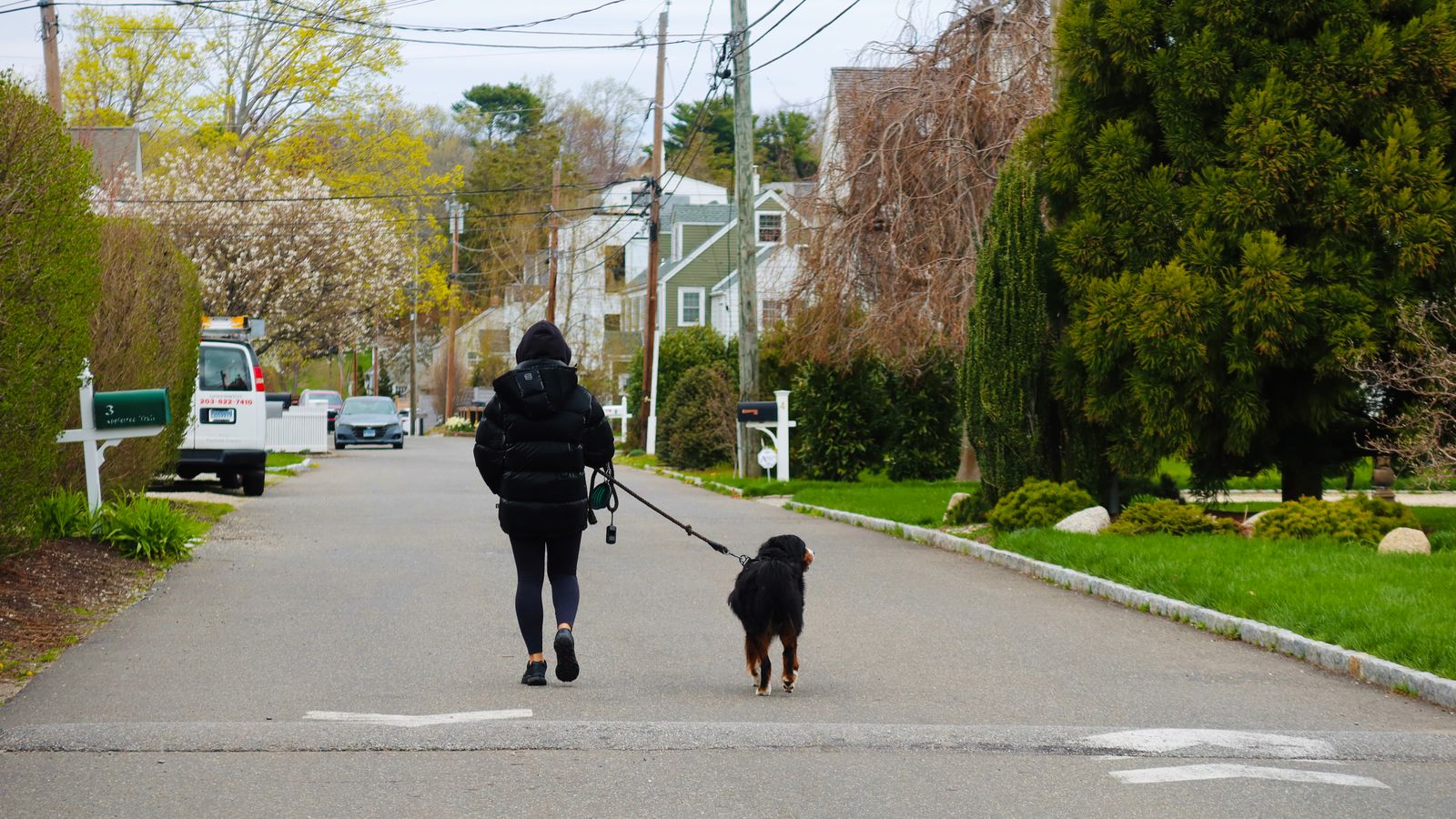
You walk out to grab the mail and there it is again, right in the parking strip, and it is definitely not your dog’s. Maybe you have never even owned a dog. Either way, somebody else’s is using your grass as a rest stop, and you want a dog poop deterrent that does something more than make you feel better while you spray it. We clean yards all over the South Sound, and we hear this one constantly from Tacoma to Silverdale. Here is what holds up, what is a waste of a Saturday, and how to handle the neighbor part without starting a feud.
Why Your Yard Got Picked
Dogs are not choosing your lawn at random. They are reading it. Once a dog goes in a spot, the scent that gets left behind is basically an invitation for the next dog down the sidewalk, and after two or three visits that patch of grass is on the neighborhood route.
A few things make a yard a magnet:
- The parking strip. That skinny band of grass between the sidewalk and the curb is the single most-used bathroom in any Tacoma neighborhood. It is unfenced, it is soft, and most walkers do not think of it as belonging to anybody.
- Corner lots. More sidewalk frontage means more traffic past your grass, which is why corner houses in places like North End Tacoma or downtown Puyallup take the brunt of it.
- Soft, well-watered turf. Dogs prefer grass over gravel or bark, so the nicer your lawn, the more appealing it is.
- Cover. A hedge, a low retaining wall, or a big rhododendron gives an owner a spot where nobody sees whether they scooped or not.
Fall Is When This Gets Worse Around Here
The problem is seasonal, and September is when it turns. In late June the South Sound stays light past nine, so anybody who skips the bag is doing it in full view of the street. By mid-October sunset has slid back past 6:15 and is still dropping, and once the clocks change on the first Sunday of November it is dark before most people get home from work. Dog walkers do not stop walking. They just stop being visible.
Cooler weather also brings out more of them. Nobody wants to walk a dog in an 85 degree afternoon, but a 55 degree evening in Lakewood is close to perfect walking weather, so foot traffic past your front lawn goes up right as the light goes down. Add the rain coming back, which pushes waste down into saturated soil instead of leaving it sitting on top where the owner would notice it, and you get a fall where the mess piles up faster than you can spot it.
Pierce County puts real numbers on the scale of this. According to Pierce County’s pet waste program, the county is home to more than 206,000 dogs, producing more than 34 tons of waste every single day. Only a portion of that gets picked up, and a lot of what does not ends up in exactly the kind of front yard you are standing in.
What Actually Works as a Dog Poop Deterrent
There is a whole shelf of products that promise to solve this. Some of them do something. Most of them are scent-based and wash off in the first decent rain, which in this region is not a long shelf life. Here is the honest ranking based on what we see holding up in real yards.
Physical barriers beat everything else. A low border fence, a run of dense shrubs, or even a knee-high decorative edging along the parking strip works better than any spray, because it changes the walker’s behavior rather than the dog’s. Most people will not step over a barrier to let their dog go. Boxwood, ornamental grasses, and low fencing all do the job, and they keep doing it in December.
Motion-activated sprinklers work, with a catch. They startle a dog off the grass and they are genuinely effective. The catch is that our winter cold snaps will crack the housing and split the hose fitting, so plan on pulling them in and draining the line before the first hard freeze, usually sometime in late November or December depending on how far inland you are.
Lighting helps more than people expect. A motion-sensor floodlight over the front lawn removes the cover of darkness, and since the darkness is half the reason this ramps up in fall, taking it away changes who stops. This is one of the cheapest fixes on the list.
Scent deterrents are a maintenance job, not a fix. Diluted white vinegar and citrus peel both make a patch less appealing to a dog, and they are cheap and safe. They also stop working the moment it rains, which around here is most of the time from October on. If you go this route, expect to reapply constantly, and go easy on the vinegar because it will burn your grass if you pour it on straight.
Do not use cayenne, chili powder, or mothballs. We see people recommend these and we want to be clear: capsaicin gets in a dog’s eyes and nose and causes real pain, and mothballs are toxic if a dog or a curious toddler eats them. You are trying to redirect a dog, not injure one, and hurting a neighbor’s pet turns a small annoyance into a much bigger problem for you.
Removing the existing scent matters more than adding a new one. This is the step almost everybody skips. If the marking scent stays in the soil, the next dog will find the same spot no matter what you sprayed on top. Rinse the area well and treat it with an enzyme cleaner that breaks down the residue rather than covering it. We go deeper on that in our guide to dog waste odor control in PNW yards.
Do “No Dog Poop” Signs Actually Do Anything
Yes, and more than most people expect, but only if you are realistic about who they work on. A sign will not change the behavior of the one person who genuinely does not care. It will absolutely change the behavior of the much larger group who were just not paying attention, or who assumed nobody would mind.
A few things that make a sign land better:
- Put it at dog height, not eye height. A stake sign at the edge of the grass gets seen. A plaque on the house does not.
- Keep the wording friendly. “Please curb your dog, thank you” gets better results than something aggressive, because a sign that reads as hostile makes people want to defy it.
- Put one at each entry point. Corner lots usually need two, one facing each sidewalk.
- Weatherproof it. A paper sign in a sheet protector lasts about a week in a Gig Harbor November. Spend the extra few dollars on a metal or heavy plastic one.
Pairing a sign with a small bag dispenser is a move we have seen work well in Puyallup and Olympia neighborhoods. It removes the most common excuse, which is that the owner genuinely ran out of bags two blocks ago.
Having the Neighbor Conversation
If you know whose dog it is, a direct conversation almost always resolves it faster than anything you can buy. The trick is to give them an out. Most people are embarrassed, not defiant.
Something like this works: “Hey, I think your dog got my parking strip a couple of times this week. Totally get it if you ran out of bags, I keep a few by the mailbox if you ever need one.” That is friendly, it assumes good faith, and it makes clear you noticed. Nine times out of ten that is the end of it.
What to avoid: a passive-aggressive note taped to a door, a photo posted to the neighborhood group with an address in it, or anything that puts them on the defensive in front of other people. Those escalate, and you still have to live next to this person.
If you do not know whose dog it is, the motion light and the sign do a lot of the work for you, because the person doing it usually knows they are doing it.
When It Is Time to Report It
Every city in our service area has rules on this, and Tacoma’s are worth knowing. Under the city’s animal control rules, dog owners are required to scoop up waste and dispose of it in the garbage in a sealed bag, and dogs must be on a leash no longer than eight feet or confined to their owner’s property. Tacoma Animal Control takes both scoop law and leash law complaints through Tacoma FIRST 311, or by phone at 253-627-7387, option 2. One thing to know before you file: complaints are subject to public disclosure unless you submit them anonymously.
Realistically, enforcement on a single pile is unlikely. Where reporting does matter is a repeat problem, especially an off-leash dog that is roaming the block unsupervised, which is a different and more serious issue than a walker who forgot a bag.
Pierce County’s guidance on disposal is worth passing along to a neighbor who is genuinely trying: bag it and put it in the trash. Not the yard waste bin, not the compost pile, and not the toilet.
If You Manage a Property, This Is a Different Fix
Signs and vinegar are homeowner tools. If you run an HOA, an apartment complex, or a commercial property in Pierce or Thurston County, the thing that actually moves the needle is making the right behavior easier than the wrong one. That means waste stations placed where dogs actually go, stocked with bags, and emptied on a real schedule instead of whenever somebody notices. We wrote up the whole approach in our pet waste station maintenance guide, and it applies just as much to a 20-unit building in Bremerton as it does to a 200-home community in South Hill.
Clean Up What Still Gets Through
No deterrent is perfect, and what lands in your grass is not just an eyesore. Dog waste carries roundworm, giardia, and E. coli, and roundworm eggs in particular can stay viable in cool, damp soil for a long time, which is a fair description of a South Sound lawn from September through May. That is a real concern if kids play in that yard. We covered the specifics in the hidden health risks of pet waste.
So the full plan looks like this: put up a barrier or a sign, add a motion light before the evenings get dark, kill the scent that is inviting repeat visits, talk to the neighbor if you know who it is, and clear whatever still shows up promptly instead of letting it sit through a week of rain. If you want the last part off your plate entirely, that is our whole job. We handle weekly and twice-weekly waste removal across Pierce, Kitsap, and Thurston counties, and we do not particularly care whose dog left it. We just take it away.
We Scoop What They Leave
Even with a good dog poop deterrent, some of it still lands in your grass. We clear it weekly across Pierce, Kitsap, and Thurston counties so you're not the one out there with a bag.
Get a Free Quote