
Can you compost dog poop? In-ground digesters and what actually works
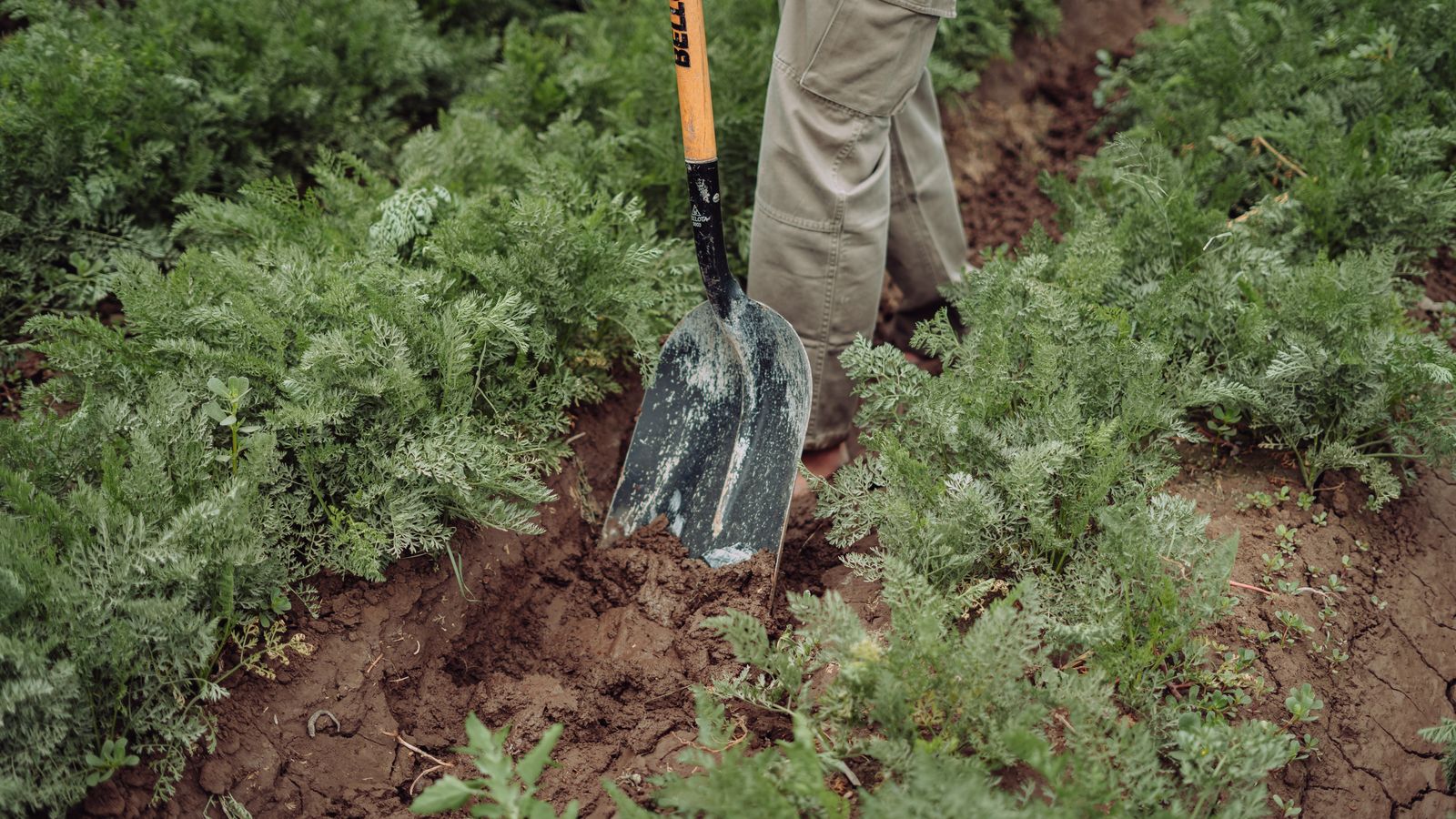
You already compost the coffee grounds you didn’t drink, the carrot tops, the sad half of the lettuce. So every week when you bag up another pile from the backyard and walk it out to the garbage can, a reasonable question shows up: why can’t you compost dog poop the same way? It’s organic. It came out of a living animal. The bin is right there.
The internet gives you two answers and they contradict each other, which is why you’re here. Half the results say absolutely not, ever. The other half sell you a plastic tub with a lid and tell you to bury it next to the rhododendrons. Both camps are partly right, and the difference between them comes down to one number and one hole in the ground. Here’s the honest version, written by people who spend Tuesdays in Puyallup backyards and Thursdays in Silverdale ones.
You cannot compost dog poop in a backyard bin
Start with the thing almost everyone gets wrong. That black plastic tumbler in the side yard, the wire bin behind the shed, the pile of leaves you turn twice a year: none of it is a place for dog waste. Not a little bit. Not “buried deep in the middle.”
The regional guidance here is not subtle about it. Puget Sound Starts Here, the stormwater education program that covers our corner of the state, puts it flatly: never put pet waste into your backyard compost or a yard waste bin, because compost facilities do not get hot enough to kill the bacteria and organisms in it. The City of Tacoma says the same thing about the green cart, noting that pet waste contains harmful bacteria and microorganisms that can be hazardous if composted, and that it belongs bagged in the garbage.
So if you’ve been sneaking it into the yard waste cart in North End Tacoma or Lakewood, stop. You are not composting. You are contaminating an entire truckload of material that goes on to become soil somebody spreads around their tomatoes.
VERDICT: DOESN’T WORK. Not a maybe.
The magic number is 140, and your yard never gets there
Here’s the actual science, minus the chemistry lecture.
Ordinary backyard composting is a slow, cool, forgiving process. It breaks down plant matter beautifully because plant matter doesn’t carry anything that wants to live in your kid. Dog waste does. Roundworm, hookworm, whipworm, giardia, salmonella, and the various bacteria that make a yard genuinely unhealthy, all of which we covered in more detail in the hidden health risks hiding in your backyard.
Killing those organisms takes sustained heat. UF/IFAS Extension puts the target at 140 degrees Fahrenheit and says plainly that if you don’t hit that number, you may not kill the pathogens present. A leaf pile in Gig Harbor in February is running at ambient air temperature and a light drizzle. It is not hitting 140 degrees. It is not hitting 90.
And even at 140, the extension is honest about the limits: the Natural Resources Conservation Service isn’t confident that composting gets hot enough to kill Toxocara canis, the large roundworm, which is one of the most heat-resistant things in dog waste. That’s the same parasite the CDC flags in its toxocariasis guidance, where eggs pass into the soil in feces and need a couple of weeks sitting in the dirt before they become infectious. Which is exactly why the answer to “should I scoop weekly” is yes, and the answer to “will my compost pile sanitize it” is no.
What an in-ground digester actually is
Now the part that does work, with caveats.
An in-ground digester is not a compost bin. It’s closer to a very small septic system. You sink a container into the ground, the container has an open or perforated bottom, and you drop waste in through a lid at grade level. Water and a packet of enzyme or bacteria starter go in with it. The solids break down anaerobically inside the tub, and the liquid that’s left percolates out the bottom into the surrounding soil, well below the surface where your dog walks and your kids play.
The classic consumer version is the Doggie Dooley style unit, a galvanized or heavy plastic tub with a foot-pedal lid. The version we install for clients is the same idea, sized and sited for a real dog household rather than a novelty. Either way, the mechanism is identical: contain, break down, drain down.
What you get out of it is the elimination of bags. No plastic, no weekly walk to the garbage can, no bin that smells like a kennel by Thursday. We made the full case for getting off plastic bags in our guide to eco-friendly dog waste disposal, and the digester is the top rung of that ladder.
What you do not get is garden compost. Nothing comes out the top. There is no finished product to shovel into a raised bed, which conveniently sidesteps the most dangerous question in this whole topic.
Siting one in South Sound soil, and why September matters
This is the part that decides whether your digester quietly works for years or turns into a sealed tub of soup by Christmas.
A digester only functions if the liquid can leave. That means drainage, and drainage in the Puget Sound lowlands is a genuine problem, not a theoretical one. Enormous stretches of Pierce and Kitsap counties sit on Alderwood soils, formed over dense basal glacial till. Per the official USDA soil series description, that cemented layer sits roughly 50 to 100 centimeters down, water moves through it very slowly, and a perched seasonal water table shows up at about 30 to 90 centimeters deep from December through April.
Translate that into English and it says: in a whole lot of yards from Spanaway to Port Orchard, there is a concrete-like layer about two to three feet under your lawn, and from midwinter through early spring, water sits on top of it. If you sink a digester into that zone, it fills with groundwater and stops digesting. You have built a very expensive puddle.
Which is why we schedule installs in late summer and early fall and why September is the right month to be reading this. The ground is as dry and as workable as it gets, the perched water table hasn’t arrived yet, and you can actually see how your soil behaves before the rain starts making every decision for you.
Before you commit to a spot, do the cheap test. Dig a hole about as deep as the unit will sit, fill it with water from the hose, let it drain, then fill it again. If the second fill is still standing there the next morning, that spot fails. Move uphill, move toward the sandier corner of the yard, or accept that a digester is not the tool for your property.
A few other siting rules worth taking seriously:
- Keep it well away from the house, the crawlspace, and any downhill seep line. On sloped lots in Bremerton and Gig Harbor, water follows the top of that hardpan sideways and comes out at the bottom of the slope.
- Keep it far from any well, and treat the setback the way you’d treat a septic tank. If your property in rural Thurston or Kitsap County is on a well, call the county health department before you dig, not after.
- Keep it away from the vegetable beds and the fruit trees. More on that in a second.
- Put it somewhere you’ll actually walk to on a dark, wet January evening. A digester at the far back fence in Olympia gets abandoned by November.
Feeding it through a wet PNW winter
Digesters slow down when the soil gets cold, and our soil gets cold and stays wet for months. That’s normal. Plan for it instead of assuming the unit broke.
Add water regularly, especially in summer when the ground dries out. Anaerobic bacteria need moisture and the enzyme starter is useless without it. Keep the tablet or powder schedule the manufacturer gives you, and don’t dump a triple dose in to “catch up” after a slow month.
Don’t overload it. A digester sized for one dog and fed by three is going to back up, and the failure mode is not subtle. If your household runs two large dogs in University Place or Puyallup, size up at install rather than trying to fix it later.
Never put bags in the tub, including the ones that say compostable. Those bags are certified for industrial facilities, not for a cold hole in your side yard, and they will still be intact a year from now sitting on top of everything else like a lid.
And if the yard already smells before the digester goes in, the digester alone won’t fix it. Odor lives in the soil, not just the pile, which is a separate job with a separate solution. We walked through that in dog waste odor control in PNW yards.
Where the finished product can and cannot go
If you skip everything else, read this.
Do not put anything derived from dog waste on food crops. Not the vegetable beds, not the strawberry patch, not the blueberries, not around the base of the apple tree. UF/IFAS says it directly: don’t apply compost containing dog waste to food crops, and limit it to non-food plantings like flower beds and shrubs.
Fall is exactly when this question turns dangerous around here, because September and October are when people are amending beds for next year. Somebody with good intentions decides the tub in the corner has produced something useful and spreads it where the carrots go. Don’t be that person. The whole appeal of a properly sited in-ground digester is that there’s nothing to spread in the first place.
When a digester is the wrong answer
We install these, and we still tell plenty of people no.
If your lot is heavy clay, if you’re sitting on shallow till, if the backyard already turns into a wetland every December, or if you’re renting and can’t dig, a digester is the wrong tool. So is a bin. In those yards the correct answer is boring and it works: scoop on a real schedule, bag it, and put it in the garbage where the city says it goes. If you’ve let it pile up over a wet winter and the yard needs a reset before any system makes sense, start with a one-time deep clean and go from there.
Honest hierarchy, best to worst:
- In-ground digester, properly sited and fed. No bags, no landfill, nothing to spread. Only works where the soil drains.
- Scoop weekly, bag it, garbage. Unglamorous, universally correct, endorsed by every agency in the region.
- Backyard compost bin. No.
- Yard waste cart. Also no, and it wrecks somebody else’s compost too.
Let the Squad handle the dirty part
Digesters are great right up until the part where you’re the one lifting the lid in the rain. That’s the piece people quit on, usually around week six of a Tacoma November.
So hand off the part you’re actually going to quit on. We keep the yard scooped on a schedule across Pierce, Kitsap, and Thurston counties, so whether or not you run a digester, the waste is gone every week and you never think about it again. Toodle-loo to the poo.
We'll Dig the Hole
Dooky Squad installs in-ground dog waste composters across Pierce, Kitsap, and Thurston counties, and we handle the weekly scooping that feeds them. You never have to lift the lid.
Get a Free Quote